Modality principle yes. And engaging learners yes. And empowering learners yes. I want to make podcasts so that dyslexic readers have another option. So that academia and theory and a little philosophy seeps into iPods on train journeys. So that actors can ham up academic texts for easy listening. So I read about related theory. And about good podcasts. And how listening only is poor learning as you can't control pace. And I get excited but also grumpy. Does learning always have to be entertaining? If the ideas don't grab you however they come, will their funky presentation?
I played radio plays once for some theatre students. They didn't like it. So. Do I add visuals or is there some value in persisting with the advantages of just wanting / having to listen to something? The image, if it is to help explain , will also simplify.
Also, radio plays are so great. Can't I just make them like them?

A blog about new technologies, new media and actor training
Tuesday, 27 September 2011

Monday, 26 September 2011
Podcasting
Hmm. Casting for the best pods.
Starting to engage with podcasts. There are articles I really would like my students to read. And some just find it too difficult. If they were recorded, would they listen? And do they prefer video? Anyone else making podcasts for teaching?
Starting to engage with podcasts. There are articles I really would like my students to read. And some just find it too difficult. If they were recorded, would they listen? And do they prefer video? Anyone else making podcasts for teaching?
Tuesday, 19 July 2011
Great Teachers: I found this article and I felt like sharing it with this group.
Click Here to access the article
Hope you enjoy the article, I found myself agreeing completely with every single point but then I realise that problem solving approach may not be every lecturers cup of tea....
Funny thing is I always saw myself as a facilitator of learning and I see a blog, twitter, youtube, prezzi, mobile phone, pen, laptop, i pad or any other tool I can get my hands on as just another tool that could help me enhance the process of facilitating how to learn, appreciate, philosophize and engange hospitality....
Hope you enjoy the article, I found myself agreeing completely with every single point but then I realise that problem solving approach may not be every lecturers cup of tea....
Funny thing is I always saw myself as a facilitator of learning and I see a blog, twitter, youtube, prezzi, mobile phone, pen, laptop, i pad or any other tool I can get my hands on as just another tool that could help me enhance the process of facilitating how to learn, appreciate, philosophize and engange hospitality....
Saturday, 16 July 2011
Remembering and recording
Thinking about Vanessa's blogposts during the conference and Katie's visual recording posts...
Saw a RT on twitter which I have posted in links - article by Niemeyer on how reliance on computers to store knowledge affects our memories, and the links to remembering and doing... how does the act of visual recording/blogging help to store the memory of the thing being recorded ?
Something in the article about remembering either what has been stored, or where it has been stored resonated with me - conversations with students are ghosting through my mind - when I say I'll put session materials on Blackboard, does that cut them off from a more active participation?
So with this blogging, are there connections? I think that the act of objectification which happens as I write - a kind of self censorship based upon the location and permanence and public-ness(?!) is helpful - in the same way that editing drafts is a concrete and creative act.
The power of the written word supercedes the power of words I think - because written words leave my head and come back to lodge in it, are they welcomed and noted more specifically or with more longevity than when I just think them?
Similarly, what about the act of visually recording? This is more than taking snapshots, it involves the same processes of self censorship and selection and creative decision making as the writing, doesn't it?
But if I am not directly involved in the blogposting or visual recording, I come to those memories differently. So unless I actively engage with them, how well will I recall them?
Friday, 15 July 2011

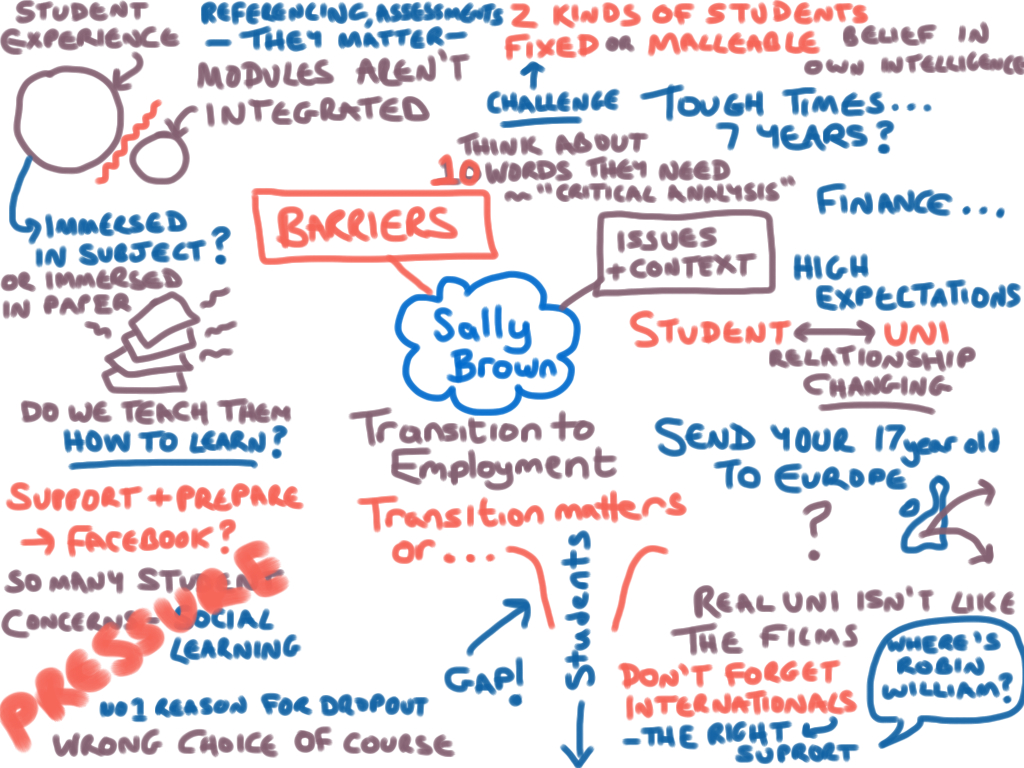
Assessment as learning
As people are walking in, how cool would it have been to have planned and choreographed proper dance flash mob for end of today?
Very.
The blog is public. But if it was projected live now on those two big screens, what would I write?
We have homework!
Thirty second theatre
-hello
-hello
-you are late
-I know
(academics like fun things. And standing. And a bit of acting)
-discuss assessment only in whole group sessions to make it fair.
-HE moving toward recognizing and accrediting achievement
ELSE
What else, what else, what else...
(Yes yes feeling guilty)
So why don't we let students design their own assessments? All the time?
-assessment as learning
- students compare good with bad reports. Decide on differences. Write them down. These then become your own criteria.
(but what if they had chosen the bad one as the better one?)
Feedback on paper is prob the most time wasting and dangerous way to give feedback.
Assessment of learning
For
As
Allow students to decide what they want feedback on?
Good questions but shouldn't it be them deciding the questions?
-jot down three questions you would like answered about your work.
- fun voting on whether learning outcomes achieved.
Very.
The blog is public. But if it was projected live now on those two big screens, what would I write?
We have homework!
Thirty second theatre
-hello
-hello
-you are late
-I know
(academics like fun things. And standing. And a bit of acting)
-discuss assessment only in whole group sessions to make it fair.
-HE moving toward recognizing and accrediting achievement
ELSE
What else, what else, what else...
(Yes yes feeling guilty)
So why don't we let students design their own assessments? All the time?
-assessment as learning
- students compare good with bad reports. Decide on differences. Write them down. These then become your own criteria.
(but what if they had chosen the bad one as the better one?)
Feedback on paper is prob the most time wasting and dangerous way to give feedback.
Assessment of learning
For
As
Allow students to decide what they want feedback on?
Good questions but shouldn't it be them deciding the questions?
-jot down three questions you would like answered about your work.
- fun voting on whether learning outcomes achieved.
Subscribe to:
Posts (Atom)